
How to Prepare a Clear Pump Inquiry for China Suppliers
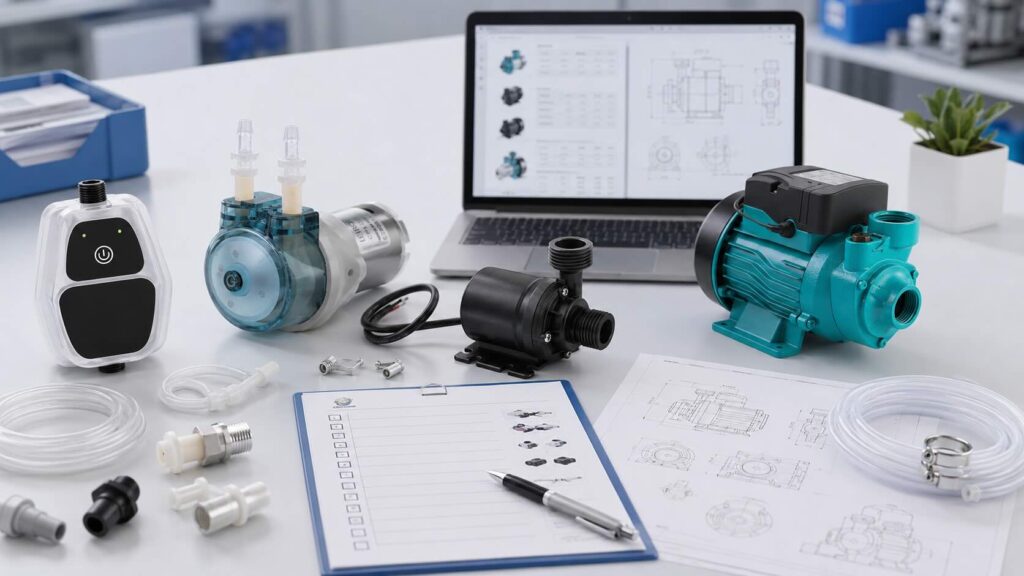
For overseas buyers, a clear pump inquiry can make the sourcing process much faster and more accurate. Many pump sourcing delays happen not because the product is difficult to find, but because the application details, technical requirements, and usage conditions are not clear at the beginning.
When buyers only ask for “a 12V pump,” “a water pump,” or “a small pump,” suppliers may not know which model is suitable. A better inquiry should explain where the pump will be used, what liquid it will handle, what voltage is required, how much flow rate and pressure are needed, and whether accessories, samples, or OEM details are involved.
CNLIGHT WORLD helps overseas buyers communicate with China suppliers, compare compact DC pump options, follow up sample details, and coordinate pump accessories based on real application requirements. This guide explains how to prepare a clear pump inquiry before contacting China suppliers.
Quick Answer: What Should a Clear Pump Inquiry Include?
A clear pump inquiry should include the application, required voltage, flow rate, pressure or head, liquid type, liquid temperature, installation space, pipe or tubing size, working time, noise requirement, expected quantity, sample plan, accessory needs, and any OEM requirements such as cable length, connector type, logo, packaging, or documentation.
1. Start with the Application
The first thing to explain is the application. Different applications may require different pump types, even when the voltage or flow rate looks similar.
Common pump applications include:
Household water pressure boosting
RV and off-grid water supply
Water treatment systems
Hot water recirculation
Equipment cooling
Laboratory dosing
Medical cleaning equipment
Small liquid transfer systems
Compact equipment integration
For example, a pump used in an RV water system may need low noise, self-priming ability, and 12V power compatibility. A pump used in medical cleaning equipment may need stable flow, compact size, tubing compatibility, and controlled liquid handling. A pump used in equipment cooling may need continuous operation and stable circulation.
A clear application description helps suppliers understand the real working conditions before recommending pump options.
2. Confirm Voltage and Power Supply
Voltage is one of the first technical details suppliers need to know. Many compact pump applications use 12V or 24V DC power, especially in RV systems, off-grid water supply, solar water systems, compact equipment, and small water transfer projects.
Buyers should confirm:
Required voltage
DC or AC power source
Battery, adapter, solar controller, or equipment power supply
Power stability
Cable length requirement
Connector type
Whether the pump will be used inside equipment or as a separate water system component
For CNLIGHT WORLD’s current pump sourcing focus, 12V and 24V DC pump options are especially important for compact water and equipment projects.
3. Provide Flow Rate and Pressure Requirements
Flow rate and pressure are key details for pump selection. However, buyers should not only ask for the maximum flow rate. Actual performance depends on pipe length, height difference, filters, valves, fittings, and system resistance.
Buyers should provide:
Required flow rate
Required pressure or head
Pipe or tubing size
Distance between tank and pump
Height difference
Number of outlets
Whether filters, valves, or heaters are used in the system
If the exact flow rate or pressure is not known, buyers can describe the system layout and expected water output. Photos, sketches, or drawings can help suppliers estimate suitable pump options.
4. Explain the Liquid Type and Working Environment
The liquid handled by the pump affects pump type, material, tubing, seal, and structure selection.
Buyers should confirm:
Is the liquid clean water or another fluid?
Is the liquid hot, oily, acidic, alkaline, or chemically active?
Is the liquid used for rinsing, dosing, circulation, or transfer?
Is contamination control important?
Does the liquid need to stay inside tubing?
Is the working environment wet, dusty, hot, cold, or space-limited?
For dosing and controlled liquid transfer, precision peristaltic pumps may be considered because the liquid stays inside the tubing. For circulation and cooling, brushless DC circulation pumps may be suitable. For pressure boosting or water supply, DC booster pump options may need to be compared.
5. Share Installation Space and System Layout
Compact pump projects often have limited installation space. This is especially common in RV water systems, medical cleaning equipment, laboratory instruments, compact water treatment systems, and equipment cooling projects.
Buyers should provide:
Available installation space
Pump mounting position
Inlet and outlet direction
Pipe or tubing connection
Cable route
Tank position
Whether the pump is inside equipment
Whether vibration or noise control is important
If buyers can provide a photo, simple drawing, or layout sketch, suppliers can check whether the pump body, connectors, tubing, fittings, and power supply can fit the actual system.
6. Confirm Accessories Together with the Pump
A pump rarely works alone. Many sourcing projects also require accessories.
Common pump accessories include:
Power supplies
Tubing
Fittings
Connectors
Filters
Check valves
Cables
Mounting parts
Spare tubing
Packaging or spare parts kits
For overseas buyers, sourcing accessories together with pump products can reduce sample testing problems and communication gaps. It also helps confirm whether the pump can be installed and tested properly after delivery.
7. Mention Quantity, Sample Plan, and Order Stage
Suppliers need to know whether the buyer is asking for sample testing, small-batch sourcing, or a bulk order.
Buyers should explain:
Expected quantity
Sample quantity
Target order quantity
Project stage
Testing schedule
Packaging requirements
Target market
Whether certification or documentation is needed
A sample inquiry and a bulk order inquiry may require different communication. If the project is still in testing, it is better to clearly explain that the buyer needs samples first before confirming a larger order.
8. Prepare OEM and Customization Details
If the project has OEM or customization needs, buyers should explain them clearly from the beginning.
Common OEM details include:
Cable length
Connector type
Logo
Label
Packaging
Color
Tubing material
Fitting type
Power supply matching
User manual or documentation
Product structure adjustment
Special installation requirement
Not every supplier can support every customization request, so clear communication at the inquiry stage helps avoid wasted time.
9. Pump Inquiry Checklist for Overseas Buyers
Before contacting China suppliers, prepare the following information:
| Inquiry Item | Details to Prepare |
|---|---|
| Application | Where and how the pump will be used |
| Pump type | Booster, circulation, peristaltic, diaphragm, or not sure yet |
| Voltage | 12V DC, 24V DC, or other power condition |
| Flow rate | Required or estimated flow rate |
| Pressure / head | Required pressure, head, or water output expectation |
| Liquid type | Clean water, hot water, cleaning liquid, chemical solution, etc. |
| Installation space | Size limit, mounting position, system layout |
| Connection | Pipe size, tubing size, inlet and outlet type |
| Accessories | Power supply, tubing, fittings, filters, connectors |
| Working conditions | Duty cycle, noise, temperature, environment |
| Quantity | Sample quantity and expected order quantity |
| OEM needs | Cable, connector, logo, packaging, documentation |
10. Example of a Clear Pump Inquiry
Here is an example of a clearer inquiry:
“We are looking for a compact 24V DC booster pump for an RV water supply system. The pump will be used to move clean water from a small tank to a faucet and shower. We need stable pressure, low noise, and compact size. The system uses 24V DC power. Please help check suitable pump options with tubing, fittings, and connector support. Initial sample quantity is 2–5 pcs, and estimated annual demand depends on testing results.”
This type of inquiry gives suppliers much more context than simply asking for a “24V water pump.”
11. How CNLIGHT WORLD Supports Pump Inquiry Communication
CNLIGHT WORLD supports overseas buyers who need practical sourcing help for compact DC pumps and pump accessories from China.
Our support may include:
Understanding the buyer’s application
Checking pump type possibilities
Communicating with China suppliers
Following up sample details
Comparing voltage, flow rate, pressure, and installation needs
Coordinating accessories such as tubing, fittings, connectors, filters, and power supplies
Supporting OEM detail communication
Helping buyers reduce sourcing confusion before ordering samples
Our goal is to help buyers prepare clearer pump inquiries and move from general product searching to more suitable sourcing options.
Related Pump Categories
Explore related product categories:
Related Guides
You may also want to read:
Need Help Preparing a Pump Inquiry? Contact us now.
Share your application, voltage, flow rate, pressure, liquid type, installation space, accessories, sample plan, and expected quantity. CNLIGHT WORLD can help you check suitable pump options, supplier availability, sample details, and sourcing requirements for your project.